


Confessions From Today’s Leaders: Do We Need to Change?

What Leaders Are Finally Saying Out Loud
Over the past several months, I’ve sat with senior executives in Future of Leadership briefings where they named, with raw honesty, the pressures, gaps and realities shaping their organizations. These conversations carried emotion. Leaders weren’t detached observers. They were tired, candid, and, in some cases, frustrated by what they knew needed to change, but they didn’t have the capacity for the transformation needed.
Leaders in these briefings are ready for a modernization of leadership development. They can name the gaps clearly. They understand the urgency. They want to take ownership of a leadership system that will define their organization’s future.
Leadership today is being reshaped in ways that leaders can feel long before they can articulate. Expectations are rising, workforces are changing, and leaders are carrying levels of complexity that were never part of the job until now.
These conversations weren’t theoretical. They were Pivotal Growth leadership intelligence grounded, candid and deeply consistent across industries. And for many leaders, it was the first time their lived experiences were reflected back through data in a way that made everything finally make sense.

The turning point in every session came when the data illuminated what leaders had been experiencing, yet could now connect to a root cause. Leaders walked away with clarity that explained why:
execution feels harder;
readiness is uneven;
early-career leaders hesitate;
managers are at capacity;
culture feels louder; and
expectations keep rising ahead of system design.
The Moment Leaders Realized the System Isn’t Keeping Up
Before any slides appeared, leaders described similar patterns: managers overwhelmed by operational load, as early-career leaders stepped into bigger roles without feeling ready, and cultural expectations shifted faster than leadership norms. The strain wasn’t about capability. It was about capacity.
Several statements echoed across the briefings:
“The succession bench is very limited.” “They don’t know what they don’t know. Leadership is new to them.” “Expectations have changed, and we’re not there yet.”
These comments weren’t complaints. They were observations from leaders who see their people working hard, but losing traction inside systems built for a different era.
The Modern Leader Persona
The Modern Leader profile is someone who is purpose-driven, collaborative, feedback-oriented, emotionally intelligent, inclusive and digitally fluent. Executives immediately recognized their rising leaders. This wasn’t an ideal future state. It was their present reality.
They saw leaders who:
want meaningful connection and human leadership;
expect openness, thoughtful candor, and to be part of the change;
thrive when feel supported and can collaborate;
hesitate when overstretched or uncertain; and
carry a strong sense of purpose, but feel the weight of internal pressure.
One executive said, “This is who we have. This is who we need to develop for.”
What stood out most was how much of their leadership reality depends on relationships. Leaders described performance rising or falling based on trust, connection and communication, reinforcing what our data calls “results through relationships.” Their strongest leaders weren’t the ones with the most authority; they were the ones who could engage, collaborate and move people with them. Getting to high performance is no longer about delegation; it’s about mobilization teams.
Performance Multipliers That Explain What Leaders Have Been Feeling
We explored the performance multipliers our research unlocked. Performance multipliers are the leadership capabilities that create the largest performance ripple effect by showing the strongest and most frequent positive correlations across Pivotal Leadership’s 20-dimension model. Engagement, Flex Capacity, Inspiration, Tech Agility were the stand outs. Leaders began connecting dots they’d been struggling to articulate.
Engagement helped explain why engaged leaders drive stronger, more consistent performance and connection across their teams.
Flex Capacity highlighted the importance of adaptability in how leaders communicate and collaborate across different people and contexts.
Inspiration resonated immediately as the spark that allows leaders to motivate and energize others, especially in heavy or complex work.
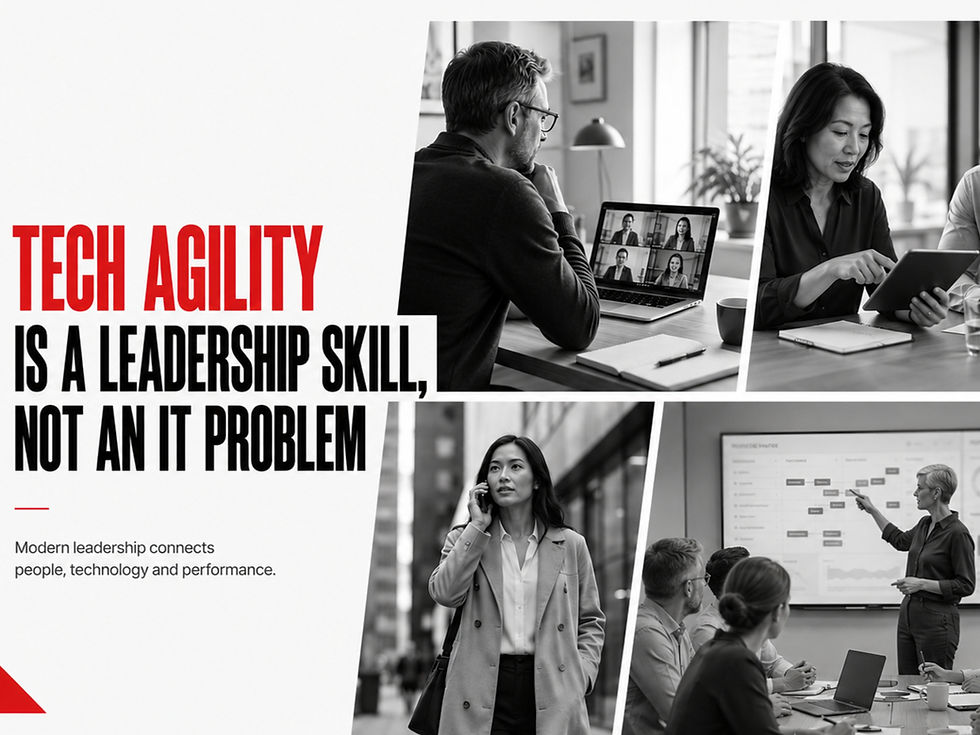
Tech Agility underscored how essential comfort with technology has become for adaptability and effective teamwork.
These weren’t abstract capabilities; they are catalysts to execution, culture, and leader confidence in real time.
Constraints That Reveal Why High Potential Leaders Struggle
The data revealed three dominant performance constraints: Self-Critic, Focus, Execution made hidden barriers visible. Constraints are the lowest-scoring dimensions across the 20 measures in our research, highlighting the areas where leaders have the least confidence and are most likely to stall.
Leaders saw early-career managers who look confident, but privately doubt themselves. They saw focus eroded by competing priorities, reactivity and volume. They saw execution slip, not from lack of commitment, but from overload and context. What can feel like poor performance is actually a stall that can be overcome, but not through training.
One leader put it plainly: “It’s not resistance. They’re working in an environment that makes it harder to perform.”
The constraints reframed leadership struggles as system-driven, not character-driven.
A Leadership System That Needs to Catch Up
What leaders described across all briefings was not a skills problem, but a system problem. Their leadership system was built for a different workforce and a different era of work, and it has not evolved at the pace of what today’s leaders are being asked to navigate. The gap between modern expectations and legacy structures has become the defining source of strain.
Here’s what they described.
Too few “ready-now” successors
Leaders promoted before they were prepared
Coaching cultures where skills exist only in a few leaders
Managers carrying emotional and operational load simultaneously
Workplaces where purpose and connection matter, but leaders lack the bandwidth to deliver either
These weren’t isolated issues. They were structural patterns and problems.
What Leaders Themselves Said Needs to Happen Next
As the conversations shifted from insight to action, leaders became precise about what must change. The data revealed the patterns, but the discussion made the implications impossible to ignore. These weren’t long-range ideas; they were immediate priorities leaders know they must address to strengthen their pipeline, support their managers, and keep pace with a workforce whose expectations have already moved ahead.
They consistently emphasized the need to:
prepare leaders earlier, not once they’re already in the job;
support manager level leaders before they burn out, not after;
stop waiting until a role opens up to figure out who’s ready;
align leadership expectations to today’s workforce, not the one they inherited; and
reduce the noise that makes leadership reactive instead of intentional.
These were immediate priorities leaders were already working toward, but now made sharper and more urgent by the conversation.
PGI’s View: The Future of Leadership Is System-Level Work
The future of leadership won’t be shaped by another competency model. It will be shaped by modernizing the leadership system itself.
Here’s what needs to evolve.
The organizational definition of leadership, not the opinions of leadership capability
Thinking about results through relationships. The incoming workforce wants it and will lead this way
How leadership is scaled enterprise wide, not just how leaders are trained
How the Modern Leader is developed, not using the boomer-era playbook
How managers are supported, not only what is expected of them
How distraction is reduced, so leaders can focus their energy and effort on what drives results
The future of leadership is already here. The question is whether our systems will evolve fast enough to support the leaders who will carry us into it.
Your leadership system needs to develop leaders who can execute, perform and deliver results through today’s millennial- and Gen Z-dominated workforce.
We have the leadership intelligence, playbook and solutions to help our clients scale leadership faster.


Bài viết này ngắn gọn mà dễ hiểu, mình đọc liền một lượt là nắm được ý, cảm ơn bạn đã chia sẻ nhé. Mình cũng có thói quen xem thống kê XSMB hằng ngày, nhưng hồi trước phải mở nhiều chỗ khác nhau nên mất công và dễ bị rối. Về sau mình tự gom lại cho tiện theo dõi, kiểu khi cần chỉ việc mở ra xem lại ngay, nên mình để chung một chỗ trên soicau247.com để đỡ phải lục tìm. Không phải lúc nào mình cũng có thời gian ngồi tra từng nơi, nên có sẵn một trang tổng hợp như vậy thấy nhẹ đầu hơn hẳn. Ai cũng hay cập nhật số liệu theo ngày…