


The 2026 Pivotal Leadership Outlook

Organizations that build energy, connection and enablement will outperform
Leadership in 2026 will be constrained less by strategy, and more by three realities: energy, connection and enablement.
Energy: The leader’s capacity to stay clear, confident and composed under pressure. It’s what fuels decision quality, and team tone. When energy depletes, performance becomes erratic no matter how talented the leader.
Connection: The trust, focus and alignment that keep people moving together. Connection is the bridge between energy and action. It’s also how confidence transfers across a team.
Enablement: The structure, objectives, coaching and feedback that turn effort into consistent execution. It’s where potential becomes measurable performance.
Most leadership systems were not built for what’s needed in 2026. They were not built to unlock multi-generational potential, strengthen readiness early, or sustain performance through ongoing complexity.
These themes are not emerging; they are already impacting performance, execution and results. They are not being readily adopted because they take the inner work that we’re used to doing, which leadership systems aren’t built to handle.
What we started talking about in 2022 as a trend has now shifted to a point that leadership system must dramatically be changed. 2025 was the tipping point. If your leadership system hasn’t evolved, then it’s time to start.
Modern leaders are driving performance in new ways.
Modern leaders are purpose-driven, resilient, and relationship-focused. They deliver results through engagement, adaptability and trust, not hierarchy.
We know this, so what do we need to do? Below is our experiential, data- and research-backed point of view on 2026 leadership success.

What Senior Leaders Are Really Saying
Across our executive briefings, leaders are not talking about abstract futures. They are candidly talking about strain inside their leadership engine, rising risks, and the pressure to modernize without breaking what still works.
Five themes are showing up everywhere.
1) System Risk and Readiness
Leadership development can no longer be timed to roles. It must be embedded earlier, measured continuously, and aligned to future performance demands.
2) Workforce Shift and Generational Tension
The leadership system is lagging workforce expectations. This isn’t resistance to leadership. It is resistance to outdated models that do not reflect how work actually gets done.
3) Leadership Capacity and Overload
Capacity is becoming the silent limiter of execution quality. When leaders are depleted, judgment suffers, relationships strain, and performance becomes inconsistent.
4) Culture, Engagement and Relationship Expectations
Leaders are realizing culture is no longer a story. It is a performance lever. Engagement is no longer a sentiment metric. Our data and research shows that it’s a performance multiplier.
5) Modernization and Opportunity
Organizations must develop the leaders they already have because legacy systems are failing the next generation. Coaching is the essential skill that remains inconsistent, rather than broadly embedded.
The 2026 Leadership Priorities: What to Focus On
You do not need another set of leadership ideals. You need performance capability and capacity that matches today’s workforce reality and execution demands. You need a visible leadership performance engine.
Here are the priorities that matter most, which are grounded in leadership trends, Future of Leadership research patterns, and what clients are experiencing in real time. Most of the these are what we shared last year:
1) Energy and Capacity: The Wellness Mindset
In 2026, energy is not personal. It is organizational infrastructure.
Leaders who manage energy, protect resilience and sustain focus create stability for teams and consistency in execution.
Wellness is no longer a benefit conversation. It is a leadership performance requirement.
2) Flex Capacity: The Human-centric Performance Multiplier
Flex Capacity is what allows leaders to access adaptability and convert diversity into performance. The workforce is too diverse in style, expectation and pace for a comfortable default leadership style.
Leaders who can flex how they communicate, coach, challenge, and decide will mobilize faster and lead with less friction.
3) Leaders Must Coach
Coaching capability is now a baseline leadership requirement, not a differentiator. Without it, leaders become bottlenecks instead of multipliers. Employees need development in motion.
4) Results Through Relationships
Results are increasingly achieved through engagement, trust and relationship strength, not authority. This is the shift many leaders are still underestimating because most leaders of leaders use a playbook that focuses on results first. For the dominant employee demographic, the path to performance is paved through strong relationships.
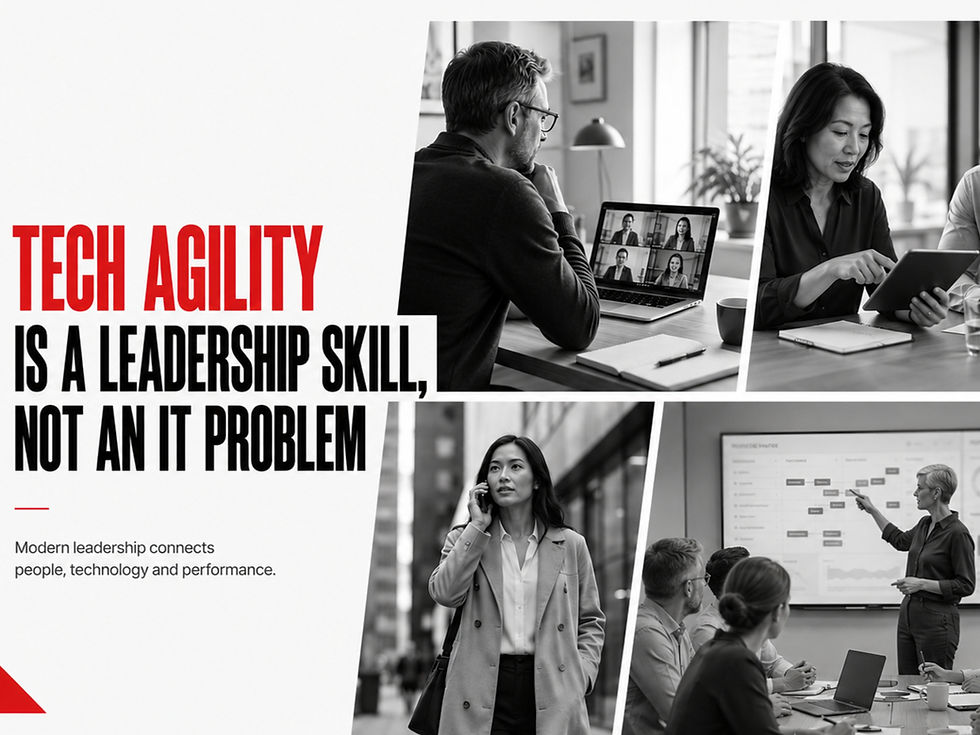
5) Tech Agility
AI, data and digital collaboration are now part of leadership performance and how teams work together. Tech agility is not solely about being technical.
6) Proactive Momentum
Leaders need to space to build momentum, make decisions for the future, and create capacity for future readiness.
It’s clear that there’s one common thread across all six priorities.
Leadership development has shifted from content to capacity. The inner work of leadership enables leaders to show up with energy, presence, and relational strength when the environment is demanding. It’s what is needed for the modern leader.

What to Do Next (Strategic, Not Tactical)
If your goal is higher leadership impact and outcomes in 2026, the question isn’t: What program should we run? The question is:
What kind of leaders does our business need next, and what systems will reliably produce them?
Three moves create a clear path forward.
Start with the future: Define your leadership strategy and the leader personas your business needs.
Measure the now: Use diagnostics to build data to assess current performance strengths and constraints. Take the guesswork out of what you need to prioritize and invest in.
Design for results: Build systems grounded in data and for today’s leadership mandate. Customize and personalize programs to enable how your leaders can perform in today’s workplace
To pressure-test readiness, here are the questions leaders are increasingly asking.
Who is our modern leader persona, and who is actually in our pipeline today?
What are our performance multipliers and constraints?
What is our leadership execution playbook, and is it scalable, measurable and enterprise-ready?
You can’t lead 2026 performance with yesterday’s system.
Pivotal Leadership for 2026
As traditional competitive advantages continue to erode, leadership is re-emerging as one of the few that compounds over time that you can control. Effective leadership systems are critical for strategy execution. Unlocking leadership capacity is how organizations sustain growth, mobilize people, and deliver results when conditions are demanding.
In 2025, Pivotal Growth invested in understanding what modern leadership looks like in practice. Not in theory. Not in opinions. But in real organizations, under real pressure.
Through research, diagnostics and AI-enabled technology enablement, we can now measure leadership performance, provide performance formulas, and see where capacity is being built or quietly depleted.
Our commitment to being a leadership performance firm for modern leaders has given us something rare in leadership development: a practical blueprint for developing leaders who can perform.
We integrate relational intelligence, data and performance insight to turn leadership into measurable, human-centered systems. For nearly a decade, we’ve worked alongside executives, teams and organizations enabling them to outperform by data, design and proven execution.
Contact me for a customized executive briefing for your company and team.


Comments